The complete guide to UTM parameters in 2026 (with naming conventions)
UTMs are still the cheapest attribution signal you can ship. A consistent naming convention, the five parameters that matter, and the mistakes that cost teams clean data.
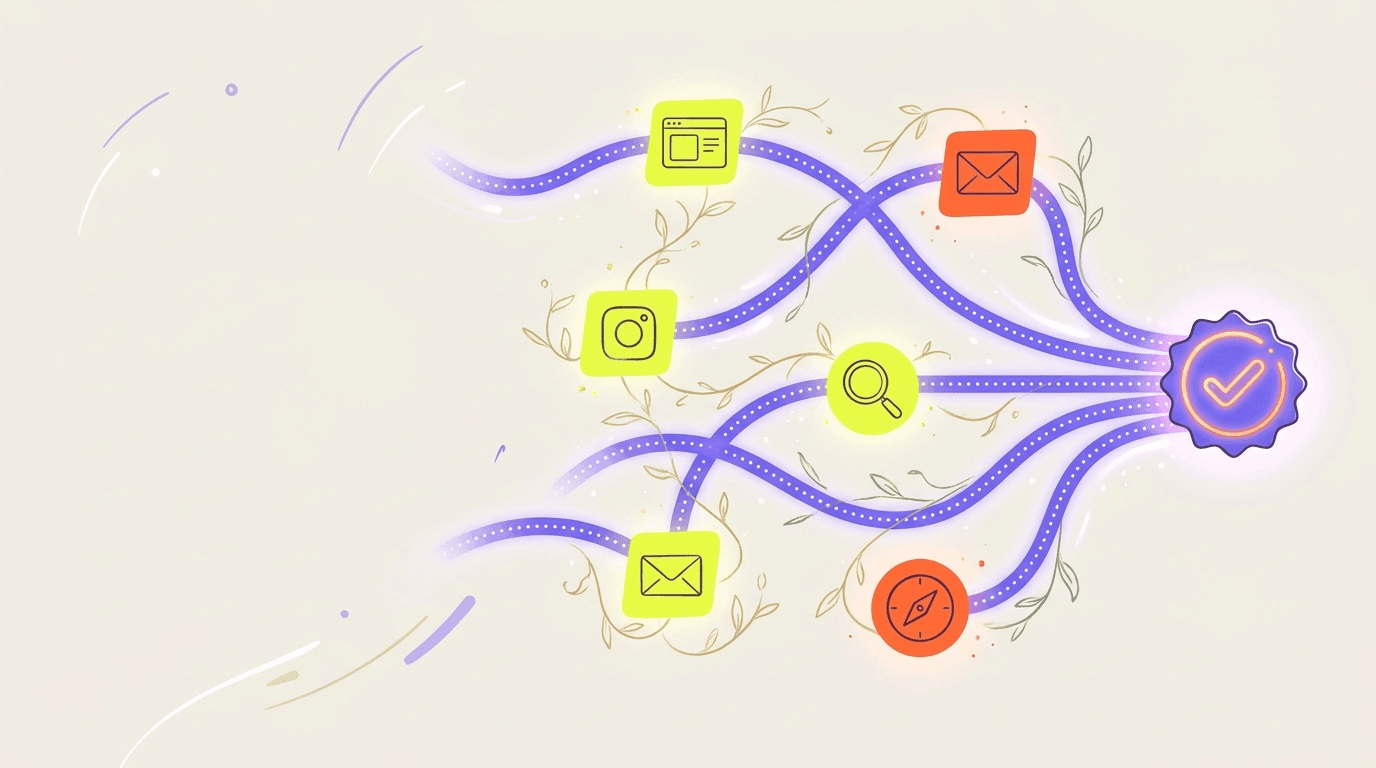
Of all the things that have changed about attribution since 2020 — iOS, cookies, LLMs, server-side tracking — one humble thing hasn't: UTM parameters are still the cheapest, most portable attribution signal you can ship. Every platform reads them. Every analytics tool stores them. They survive iOS, browser changes, and the death of cookies.
The catch: they're only useful if your team uses them consistently. A team with 12 spellings of 'facebook' across utm_source breaks its own attribution worse than no UTMs at all.
The five UTM parameters that exist
- utm_source — the platform or vendor. Where the visitor came from. Examples: facebook, google, tiktok, snapchat, x, newsletter, podcast, partner.
- utm_medium — the marketing channel. The 'how' rather than the 'who'. Examples: cpc, paid-social, email, organic, referral, display, video.
- utm_campaign — the specific campaign or initiative. Examples: spring-2026-launch, q2-retargeting, brand-awareness.
- utm_content — the creative or placement variant. Examples: hero-image-a, video-15s, headline-cta-orange.
- utm_term — historically used for paid keyword; rarely useful today since most paid platforms attach their own attribution. Skip unless you actively use it.
The naming convention that scales
Three rules that make UTMs durable across teams and tools:
- Always lowercase. 'Facebook' and 'facebook' are different values in GA4. Pick lowercase and never deviate.
- Hyphens not underscores, never spaces. 'paid-social' is portable; 'paid social' breaks URL encoding; 'paid_social' is harder to read.
- Strict source-medium pairs. utm_source = the platform name (facebook, google, tiktok). utm_medium = the channel type (cpc, paid-social, email). Never swap them.
The five mistakes that cost you clean data
- Inconsistent casing — 'Facebook', 'facebook', and 'FACEBOOK' show up as three sources.
- Vague utm_medium values — 'social' instead of 'paid-social' vs 'organic-social' destroys paid-vs-organic reporting.
- Campaign sprawl — every team member naming utm_campaign their own way. Pick a single naming scheme; document it; enforce it via UTM builder tools.
- Tagging your homepage — internal links should never have UTMs. They overwrite the original acquisition source in GA4 mid-session.
- Cross-channel campaign name collision — 'spring2026' tagging both Meta and Google means you can't separate them later. Always include the channel implicitly or explicitly in the campaign name.
The team workflow
Run a shared UTM builder (a Google Sheet, a tool like Terminus, or a simple internal form) that constructs the URL from dropdowns. No free-text fields except utm_campaign. Audit utm_source values quarterly — sort by source descending, scan for typos, merge variants in your reporting tool.
The 30-second UTM template
?utm_source=[platform]&utm_medium=[channel-type]&utm_campaign=[initiative-name]&utm_content=[creative-variant] — lowercase, hyphenated, no spaces. If you remember nothing else, remember this.
Written by
Eslam Hamdy · Floowzy, Founder
Founder of Floowzy. Spent the last decade building marketing analytics tools and running paid media across Meta, Google, TikTok, Snap, and X for mid-market and growth-stage teams.
Related posts
Hand-picked from the rest of the Floowzy blog.
 Strategy8 min read
How to attribute conversions when last-click is broken (2026 playbook)
iOS killed pixel fidelity. LLMs invisibly mediate discovery. Server-side and MMM filled half the gap. Here's the layered attribution model that works in 2026.
- Strategy7 min read
Media-mix modeling vs multi-touch attribution — when to use which (2026)
MMM and MTA answer different questions. Picking the wrong one costs you either time, money, or honesty. The plain-English breakdown.
Get the field notes in your inbox.
Floowzy joins your ad platforms read-only and surfaces what the algorithm is doing — anomalies, fatigue, marginal ROAS, cross-platform allocation. Free tier, 60-second setup.